
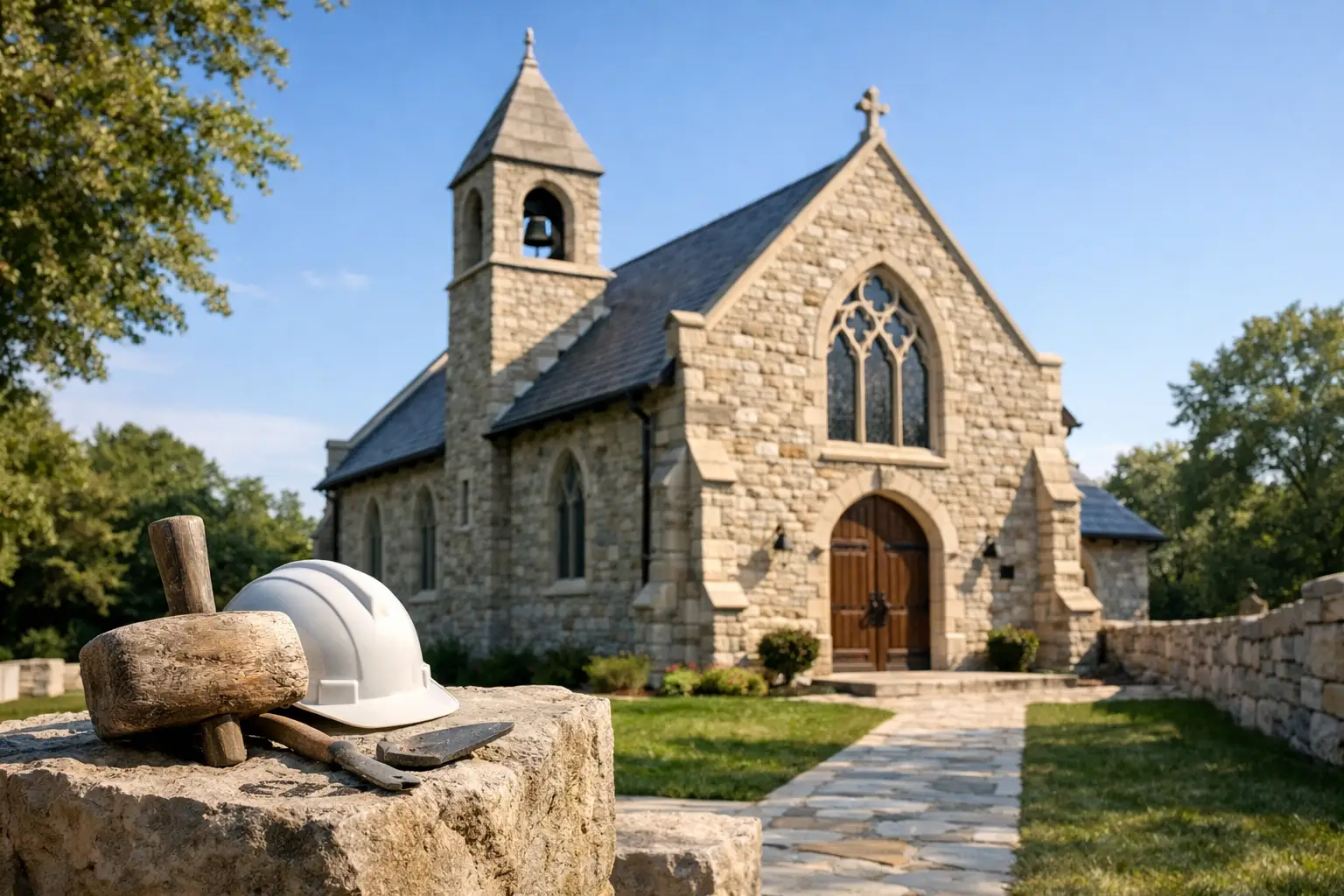
A heritage chapel restoration example is never simply a matter of replacing worn marble or polishing a historic floor. In a sacred interior, every surface carries meaning: the step softened by generations of worshippers, the veining chosen for an altar, the pale light held by a carved cornice. Restoration must protect this accumulated memory while making the chapel safe, coherent and capable of serving its community once more.
Consider a representative nineteenth-century chapel in northern Italy: modest in scale, richly composed, and affected by water ingress, settlement and decades of improvised repairs. Its coloured marble altar remained largely intact, yet loose elements, fractured steps and stained wall cladding had interrupted the architectural harmony. The task was not to make the building look new. It was to recover its original dignity without erasing the marks that gave it a soul.
The heritage chapel restoration example: reading before repairing
The most consequential work begins before a single stone is lifted. A chapel must be read as an integrated work of architecture, devotion and craft. The altar, floor, thresholds, pilasters, memorial tablets and decorative borders may have been produced by different hands, but their proportions and materials speak to one another.
A measured survey records dimensions, joints, levels, cracks, earlier interventions and areas of salt damage. Historic photographs, parish records and surviving fragments can reveal the intended design where sections are missing. In many chapels, a small offcut preserved behind an altar or beneath later flooring offers more reliable evidence of the original material than a faded archive image.
This stage also establishes the cause of deterioration. A marble panel that has detached is not necessarily a stone problem. Moisture moving through masonry, incompatible cement mortar, corroded iron fixings or structural movement may be responsible. Repairing the visible damage without addressing its source can produce an attractive but short-lived result.
For heritage stakeholders, this preliminary work is where judgement protects budget as well as authenticity. It distinguishes what can be retained, what requires careful consolidation, and what must be remade to preserve the whole composition.
Stone conservation is an act of restraint
The finest restoration is often recognised by what it refuses to do. Historic surfaces should not be stripped of their age through aggressive grinding, over-polishing or indiscriminate replacement. Patina is not neglect. It can be evidence of material quality, use and the passage of time.
In this chapel, sound marble cladding would first be documented, numbered and gently removed only where necessary. Skilled conservators can clean deposits using the least invasive method appropriate to the stone, then stabilise cracks with compatible techniques and repair small losses with carefully colour-matched mineral mortars. The aim is visual continuity from a normal viewing distance, not a false perfection visible at close range.
Where earlier cement-based repairs have trapped moisture or created hard, damaging edges, they may need to be removed with exceptional care. Lime-based bedding and pointing materials are often more sympathetic to historic masonry because they allow the assembly to manage moisture as it was originally intended to do. The exact specification, however, depends on the building fabric, exposure and advice from the relevant conservation authority.
When replacement becomes necessary
Some elements cannot be saved. A broken altar tread may pose a safety risk; a missing baseboard can leave wall finishes vulnerable; a severely fractured memorial surround may no longer carry its own weight. Replacement is justified when it supports the integrity, legibility or safe use of the chapel.
The challenge is sourcing a stone that belongs to the existing composition. Matching is about more than colour. Grain, veining, translucency, porosity, finish and the way a material responds to changing light all matter. A cool white marble beside an original warm, softly veined stone can alter the entire atmosphere of an altar. Equally, a modern polished finish can appear intrusive beside hand-finished historic surfaces.
A specialist stone workshop studies surviving samples, identifies likely historic materials and selects blocks with similar character. New pieces are then cut, carved and finished to suit their setting. They should be precisely made, yet discreetly distinguishable on close inspection where conservation principles require it. This is not a compromise in beauty. It is an honest conversation between the original fabric and the present intervention.
In the representative chapel, the missing lower sections of the altar could be recreated in compatible marble, with mouldings taken from intact sides and refined by hand. Newly fabricated pieces would restore the altar’s proportions while allowing the original central panels, with their nuanced ageing, to remain the visual focus.
The altar as a complete composition
An altar is not a collection of separate slabs. Its steps establish ceremony and movement; its frontals provide colour and symbolism; its mouldings give shadow and scale. Reinstating one damaged part without considering the whole can distort the composition.
Before fabrication, the workshop prepares full-size templates and checks junctions on site. This avoids forced joints, awkward transitions and excessive cutting around historic fabric. Where discreet new support is needed, it should be engineered to relieve stress without becoming visually dominant. Modern stainless-steel fixings may be appropriate in concealed locations, provided they do not introduce rigidity or future corrosion risks.
Floors, thresholds and the evidence of use
Chapel floors receive the greatest wear and often reveal the most moving evidence of communal life. Uneven paving may be historically valuable, but it must be assessed against accessibility and safety requirements. There is no universal answer: a chapel used only for occasional private worship calls for different decisions from one welcoming visitors, ceremonies and daily congregation.
Loose slabs can sometimes be carefully lifted, their bedding renewed and their original faces relaid. Where an area has been lost beyond recovery, replacement stone should continue the historic rhythm of joints, borders and tonal variation. It should not read as a generic patch.
Thresholds require particular attention. They endure concentrated wear, damp and movement between interior and exterior conditions. A well-designed repair may incorporate a new stone threshold shaped to shed water while respecting the surrounding profile. Such details are quiet, but they often determine whether the restoration endures.
Light, finish and sacred atmosphere
Stone in a chapel is experienced through light. Morning light may draw silver from Carrara marble; candlelight can deepen the reds and greens of coloured stone; a softly honed floor absorbs rather than reflects the room’s calm. For this reason, the final finish should be tested in situ wherever possible.
A finish that appears restrained in a workshop can become overly reflective beneath restored windows or new lighting. Conversely, a surface that is too matte may fail to relate to historic polished altar elements. Samples placed beside original fabric, viewed at different hours, allow decisions to be made with patience rather than assumption.
This attention extends to joints, edges and transitions. Thin, carefully toned joints preserve the reading of large stone planes. Mouldings need crispness but not mechanical sharpness. The goal is an atmosphere of continuity, where visitors perceive a chapel returned to balance rather than a sequence of interventions.
A long view of care
Restoration should conclude with a plan for stewardship. Staff and custodians need clear guidance on cleaning products, moisture monitoring and the early signs of movement or staining. Harsh acidic cleaners, waxes and untested sealers can cause lasting damage to calcareous stone, while routine inspection can prevent a minor defect becoming a major loss.
For institutions, this long view is part of responsible conservation. For families, congregations and donors, it safeguards a place where personal memory meets collective history. A chapel is not preserved by one exemplary campaign alone, but by the thoughtful care that follows it.
At Torchio Marmi, stone is understood as both material and inheritance. A carefully restored chapel does more than regain its surfaces. It renews a setting for silence, ceremony and remembrance, allowing the craft of earlier generations to remain present in the life of those who enter after them.