
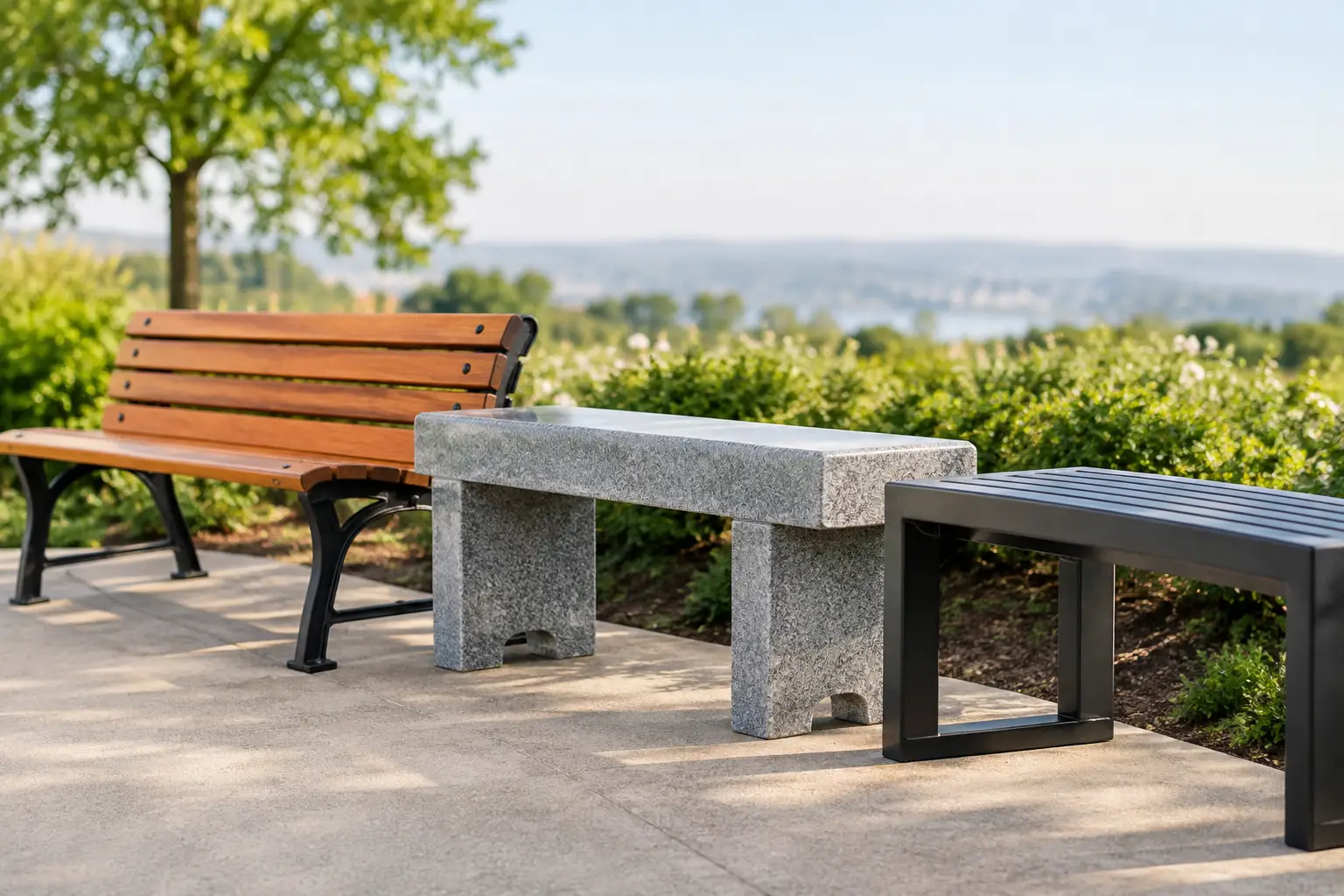
A memorial bench is never simply a place to sit. Set within a cemetery, garden, churchyard, park or private landscape, it becomes a quiet point of return: a monument to memory that must withstand weather, time and repeated human presence with dignity. Choosing the best materials for memorial benches therefore asks more than which surface looks beautiful on the day of installation. It asks how a material will age, how clearly it will carry a name or dedication, and how naturally it will belong to its setting for generations.
For a bespoke commemorative work, the answer is rarely one material in isolation. Stone, metal and carefully considered detailing can work together to create an object of lasting beauty. The right choice depends on the character of the place, local conditions, intended use and the visual language of the memorial itself.
What gives a memorial bench lasting meaning
Permanence begins with proportion and construction as much as with material. A bench exposed to rain, frost, leaf fall and changing temperatures needs a stable base, correctly designed supports and surfaces that shed water rather than retain it. At the same time, its form should invite repose. An overly polished seat may appear formal but become impractical outdoors; a finely honed surface often provides a more tactile, composed finish.
The material must also accommodate inscription. Names, dates and words of remembrance are central to the work, yet each stone receives lettering differently. Deep-cut lettering creates shadow and clarity on a pale, softly finished stone, while a dark polished granite may be especially suited to engraved and gilded text. The scale of the bench matters too. A long inscription can be integrated into a backrest or plinth, whereas a more intimate dedication may be placed discreetly on the seat edge or side return.
The finest memorial benches do not compete with their surroundings. In an ancient churchyard, a warm limestone or restrained sandstone may feel settled and appropriate. In a civic garden with formal architecture, granite or bronze can introduce a more monumental presence. In a private garden, the material may echo paving, walls or planting, allowing remembrance to become part of daily life.
Best materials for memorial benches in enduring settings
Granite: strength, clarity and low maintenance
Granite remains one of the most accomplished choices for exterior memorial benches. It is exceptionally dense, resistant to frost and weathering, and available in a rich range of colours, from deep black and charcoal grey to silvery white, warm pink and variegated tones. Its natural crystalline structure gives even a simple design depth and light.
For heavily used public spaces or exposed locations, granite offers considerable reassurance. A well-fabricated granite bench can maintain its integrity with comparatively modest care, while its weight and strength give it an unmistakable sense of permanence. Polished granite brings formality and reflection, especially in darker varieties. A flamed, brushed or honed finish can be more suitable for seating surfaces, where reduced glare and greater grip are desirable.
Its principal consideration is character. Very dark, highly polished granite can appear solemn and ceremonial, which may be exactly right for a formal cemetery or civic memorial but less sympathetic in a soft, rural landscape. Thoughtful selection of colour and finish makes the difference.
Marble: luminous beauty for sheltered remembrance
Marble carries a particular emotional and artistic resonance. Its veining, translucency and gentle luminosity have shaped monuments, sacred interiors and sculpture for centuries. A marble memorial bench can have a rare, contemplative presence, particularly when designed for a cloister, mausoleum, chapel, covered courtyard or sheltered garden.
Yet marble requires discernment outdoors. As a calcareous stone, it is more vulnerable than granite to atmospheric pollution, acid rain and surface change. Pale marble may develop a mellow patina, which some families welcome as evidence of time and natural life. Others may prefer a material that retains a more uniform appearance with less intervention.
For this reason, marble is often most successful where protection from the harshest weather is available, or where periodic specialist care forms part of the long-term plan. It rewards this attention with a beauty that is neither manufactured nor repeatable. Every block has its own movement, tone and quiet individuality.
Limestone and sandstone: harmony with historic landscapes
Limestone and sandstone are among the most sympathetic materials for churchyards, heritage sites and garden settings. Their softer tonal range - creams, buffs, greys, honeyed golds and muted browns - allows a bench to feel as though it has always belonged to the landscape. They are especially appropriate where local stone traditions guide planning requirements or where an existing memorial environment calls for visual restraint.
These stones can be carved with elegance, offering a softer, more hand-worked expression than polished granite. Lettering can be cut deeply and finished in a manner that feels integral to the stone rather than applied to it. A lightly tooled or honed finish may also make the bench particularly comfortable and visually calm.
Their trade-off is porosity and relative softness. The exact performance varies greatly by quarry and geological composition, so material selection must be specific rather than generic. In a damp, shaded site, careful attention to drainage, orientation and surface finish is essential. A qualified stone specialist will select a sound variety and detail the bench to minimise water retention and frost damage.
Travertine: architectural warmth with careful detailing
Travertine has long been valued for its warm palette, natural cavities and distinctly Italian architectural character. It can lend a memorial bench a serene, timeless quality, especially in formal gardens, courtyards and contemporary landscape schemes where stone is already part of the wider design.
Because travertine is naturally porous, its use outdoors must be deliberate. Filled and properly finished material can perform beautifully in suitable conditions, but it is not the first choice for every exposed British setting. Its strength lies in projects where architectural continuity, warmth and tactile texture are as important as maximum resistance to severe weather.
A travertine bench deserves careful fabrication: appropriately substantial sections, considered joints, a stable foundation and finishes chosen for use rather than appearance alone. When these details are resolved, the stone develops an atmosphere of measured, enduring grace.
Bronze and steel: expressive contrasts with stone
Bronze is a natural companion to stone in commemorative design. It can be used for plaques, lettering, portrait reliefs or sculptural details, gaining a nuanced patina over time. Its presence introduces warmth and legibility, particularly where a more detailed inscription or emblem is required than stone alone can comfortably carry.
Steel can create a more contemporary expression. Properly specified stainless steel offers a clean, restrained contrast with granite, marble or limestone, while weathering steel may develop an earthy surface that suits certain landscape settings. Neither should be selected merely for visual effect. Metal components require an informed approach to fixings, movement, drainage and the avoidance of staining on adjacent stone.
A stone-and-metal bench can be particularly successful when each material has a clear role: stone for weight, permanence and touch; metal for line, detail and inscription. The result should feel composed, never decorative for its own sake.
Finishes, inscriptions and the details that protect a bench
The surface finish affects both appearance and performance. Highly polished stone can intensify colour and make engraved lettering striking, but it may become slippery when wet. Honed, bush-hammered, flamed or lightly textured finishes offer a quieter visual effect and can be more practical on a seat. The choice should be made separately for each element: a polished inscription panel, for example, may sit beautifully within a more tactile bench body.
Inscriptions need sufficient depth, scale and contrast to remain legible as years pass. A simple name and dates may be cut directly into stone with great refinement. Longer texts benefit from careful typographic design and generous spacing. Bronze letters or a plaque can provide distinction, but their fixing and position should be considered from the outset, not added as an afterthought.
Equally vital is the unseen work. Foundations must suit soil conditions and bench weight. Joints should allow water to escape. The bench should be positioned to avoid persistent water run-off from trees or buildings where possible. In historic or consecrated places, permissions and established material traditions may shape the design as firmly as aesthetic preference.
Choosing with the place, not only the palette
The most fitting memorial material is the one that honours both the person remembered and the place in which remembrance will occur. Granite may offer confidence in an open, exposed setting. Limestone may speak more gently within a historic churchyard. Marble may bring incomparable light to a protected sacred space. Travertine may unite a bench with a carefully designed architectural garden.
At Torchio Marmi, each commemorative commission is approached as an individual work, where material knowledge, proportion, inscription and setting are brought into harmony. This is particularly valuable when a bench must respond to an existing monument, a family tradition, a listed setting or a landscape with its own strong identity.
A memorial bench should not merely survive the years. Chosen with care and made with conviction, it can offer a place where memory remains present: calm beneath the hand, assured in its construction, and ever more meaningful as the seasons pass.