
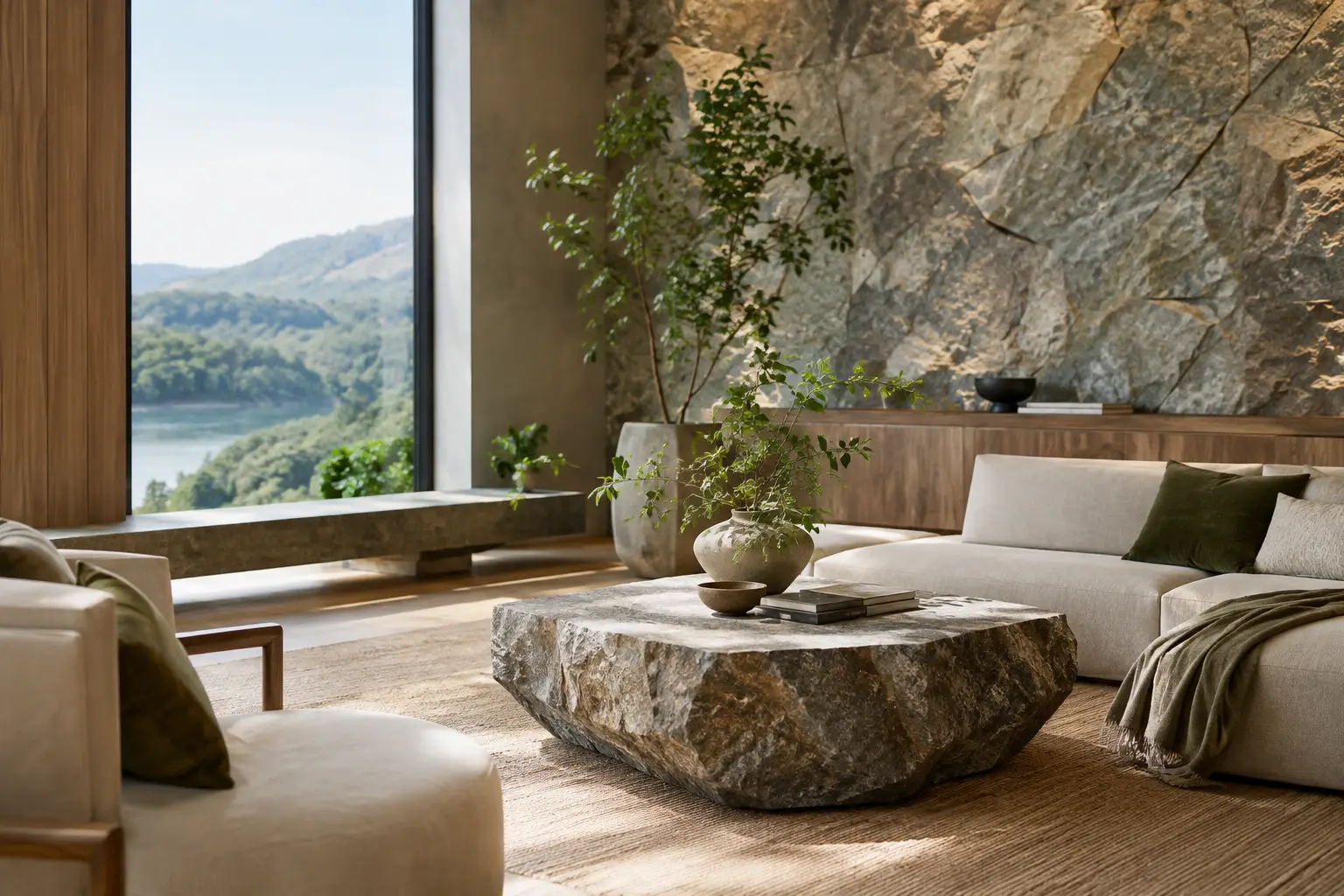
A room changes when its materials retain a visible connection to the earth. Biophilic stone does not imitate nature through pattern or colour alone: it brings the veining, mineral depth, tactile variation and quiet permanence of natural material directly into architecture. In a private residence, hotel, sacred space or historic building, this presence can make an interior feel more grounded, composed and memorable.
For generations, natural stone has shaped the most enduring Italian interiors. Today, biophilic design offers a contemporary language for an ancient understanding: people respond deeply to materials formed by nature, worked with care and allowed to express their own character.
What biophilic stone means in architecture
Biophilic design is often described as a way of strengthening the relationship between people and the natural world within built environments. It may involve daylight, planting, water, natural ventilation and views beyond the building. Stone has a particular role within this approach because it is not merely inspired by nature. It is nature, refined through selection, cutting and craftsmanship.
A slab of marble records geological time in its veining. Travertine carries the soft marks of water and sediment. Granite has a crystalline density that catches light with restraint, while onyx can glow from within when illuminated. These qualities introduce variation that cannot be repeated precisely, even within the same quarry.
That individuality matters. A biophilic interior should not feel themed or overly arranged. Its success lies in creating an atmosphere where material, light and proportion belong together. Stone offers visual calm, but never monotony.
Why natural stone creates a deeper connection
The value of stone in biophilic spaces is both sensory and architectural. Under the hand, a honed limestone feels different from brushed granite or polished Calacatta marble. Under changing daylight, each surface reveals different depths of colour, fossil traces or crystalline movement. These experiences are subtle, yet they give an interior a sense of life.
Unlike many uniform manufactured finishes, natural stone has irregularity within order. A carefully selected vein may lead the eye across a fireplace wall; a warmer band in travertine may soften a large floor; a darker stone plinth may anchor a pale room. This is not decoration applied afterwards. It is the material speaking through the design.
Stone also introduces a rare sense of permanence. In an age of rapid refurbishment, a well-conceived stone surface can remain beautiful for decades and, in many cases, for generations. Its patina becomes part of the architecture rather than evidence of obsolescence. For clients investing in a family home, a landmark hospitality project or a place of remembrance, this continuity has genuine emotional weight.
Choosing the right stone for a biophilic interior
There is no single material that defines biophilic stone. The appropriate choice depends on the intended atmosphere, the practical demands of the room and the relationship between the stone and its surroundings.
Marble brings luminosity and expressive movement. In bathrooms, entrance halls, staircases and fireplaces, it can create a refined focal point, particularly when book-matched or used as a continuous architectural lining. Highly figured marble can be dramatic, but it needs balance. In a compact room or an interior already rich in colour and texture, a quieter selection may create greater harmony.
Travertine offers warmth and softness. Its open pores, linear bands and natural tonal range work especially well in residences that seek an understated Mediterranean character. It can connect internal floors with terraces or courtyards, helping the architecture move naturally between inside and out. The finish is decisive: filled and honed travertine feels more tailored, while a more textured finish can retain a stronger sense of raw material.
Granite is valued for strength, depth and technical resilience. It is particularly suited to heavily used surfaces, external thresholds, kitchens and architectural details exposed to changing conditions. Its visual language is often more granular than marble, with mineral flecks that create a quiet, natural complexity.
Onyx is the most atmospheric choice. Used selectively for a backlit bar, wall panel, vanity or feature screen, it can transform a functional element into an illuminated work of art. Yet restraint is essential. Onyx has a strong presence, and its beauty is often most compelling when it is given a clear, considered role.
Light, finish and proportion are part of the material
A stone is never chosen only by looking at a small sample. Its scale, finish, edge detail and position in relation to daylight can alter its effect completely. A polished surface may reflect a garden or a historic ceiling, extending the visual depth of a room. A honed surface absorbs light more gently and lends itself to a calmer, more contemporary mood.
Finishes should also respond to use. Floors near entrances, pools or outdoor living areas require appropriate slip resistance. Kitchen worktops need a stone and treatment suited to daily contact with water, oils and acidic ingredients. In bathrooms, the desired visual continuity must be balanced with practical detailing, drainage and maintenance.
The size of each piece deserves equal attention. Larger slabs can create an almost geological continuity, with fewer joints interrupting the veining. Smaller modules may suit a historic setting, a curved plan or an intricate decorative composition. Neither approach is inherently superior. The best result follows the architecture, not fashion.
Designing with stone and living elements
Stone is at its most persuasive in biophilic interiors when it enters a conversation with light, timber, water and planting. A pale limestone floor beneath a mature olive tree in an internal courtyard feels entirely different from the same material under artificial light alone. A dark granite basin can give definition to a bathroom softened by timber and foliage. A marble wall behind a fireplace can reflect the changing tone of a flame.
The objective is not to fill every surface with natural materials. Too much visual information can diminish their impact. Often, one exceptional stone element is enough: a monolithic kitchen island, a hand-finished staircase, a fireplace surround or a wall that frames a view of the landscape.
For larger properties, continuity is particularly powerful. The same family of stone may appear in the entrance, garden thresholds, pool surrounds and selected interior floors, with finishes adapted to each setting. This creates coherence without repetition and allows the home to feel rooted in its site.
The value of craftsmanship in biophilic stone
Natural stone requires interpretation. Two blocks from the same quarry can differ in shade, movement and structure; a technically sound installation depends on understanding those differences before fabrication begins. Material selection, slab layout, cutting direction, reinforcement, joints and finishing are all part of the final design.
This is especially significant when a project involves book-matching, curved pieces, recessed lighting, integrated basins, bespoke furniture or the restoration of historic fabric. The maker must understand not only how stone looks, but how it behaves. A vein may be celebrated, redirected or structurally supported. A delicate edge may need a discreet technical solution. An existing stone surface may need conservation rather than replacement.
At Torchio Marmi, this knowledge is inseparable from the act of making. Stonework is approached as a custom architectural composition, shaped by the character of the material and the life of the space it will inhabit. Such work asks for patience: a willingness to inspect slabs in person, study their natural movement and allow the design to develop around what is genuinely exceptional.
A material that ages with dignity
Biophilic design is sometimes reduced to an image of greenery against clean walls. Its deeper value is more lasting: it asks architecture to restore a relationship with the materials and rhythms of the natural world. Stone fulfils this ambition not because it is fashionable, but because it has always held this capacity.
A carefully chosen stone will not remain visually static. Daylight will alter it through the hours, touch will soften its surface, and time will give it a quieter authority. For interiors designed at the service of dreams, that is perhaps the finest promise of all: not a fleeting impression of nature, but a material presence that grows more meaningful with every passing year.