
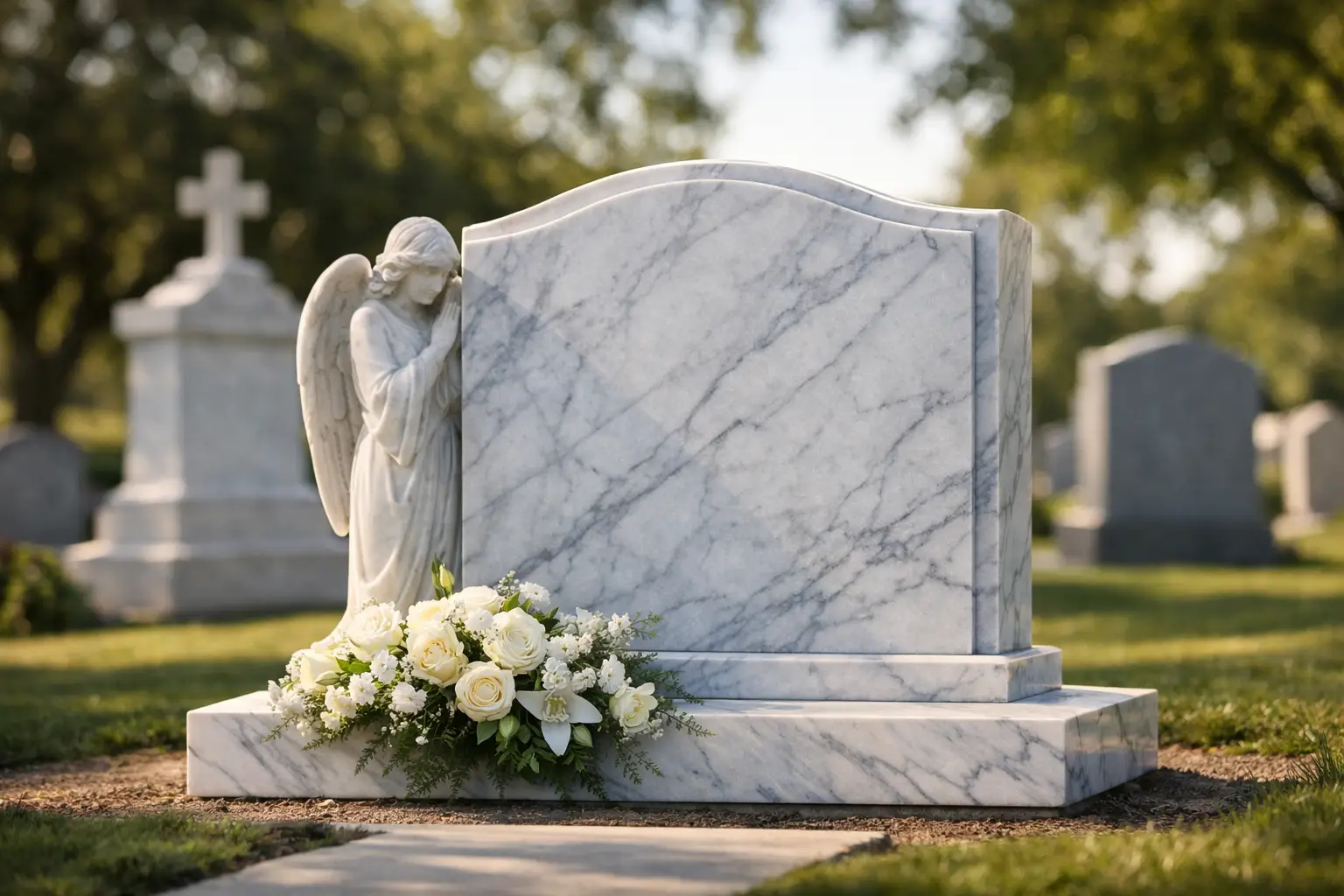
A memorial is often the final architectural gesture made for someone who mattered deeply. Custom marble memorial headstones give that gesture an individual form: a chosen stone, a measured inscription, a proportion that belongs to its setting, and details that speak quietly of a life remembered. They are not objects to be selected from a catalogue, but monuments to memory, made to endure in both material and meaning.
For families, religious communities and cemetery custodians, the decision carries an emotional weight as well as a practical one. The finest result begins by respecting both. Marble has a luminous presence unlike any other natural material, yet it demands informed selection, expert fabrication and appropriate care if its beauty is to remain eloquent through the years.
Why choose custom marble memorial headstones?
Marble has been entrusted with commemoration for centuries because it receives light with exceptional softness. Its veining, crystalline depth and gentle tonal movement mean that no two slabs are identical. A memorial in fine white marble may appear serene and almost architectural; a warmer variety, with grey, honey or rose veining, can feel more intimate and expressive.
Custom work allows these natural qualities to guide the design rather than be concealed by standardisation. The scale of the headstone can respond to the plot and surrounding monuments. The lettering can be cut, gilded, bronzed or left in restrained shadow. A carved flower, an engraved portrait, a religious symbol or a modest line of poetry may be incorporated with sensitivity, never competing with the stone itself.
This freedom is particularly valuable where a family seeks continuity. A memorial can echo the material of an existing family chapel, the character of a historic cemetery, or an architectural detail that held significance for the person being commemorated. The aim is not ornament for its own sake. It is harmony between place, material and remembrance.
The marble itself is part of the story
Choosing marble is not simply a question of colour. Each variety has its own mineral composition, density, veining and response to weather. These qualities influence how the surface will age, how crisply an inscription can be executed, and which finish will best suit the monument.
A pale, finely grained marble offers a classical character and a beautiful ground for sculptural work. More strongly veined material brings movement and visual depth, particularly on larger monuments where the pattern can be composed across several elements. Darker marbles can create powerful contrast with lettering, although their appearance may change according to light and moisture.
There is also a necessary practical consideration. Marble is a calcareous stone, and therefore more sensitive than granite to acidic conditions, airborne pollution and repeated freeze-thaw exposure. In a sheltered cemetery or temperate setting, a properly selected and finished marble can perform beautifully. In highly exposed locations, or where long-term maintenance must be minimal, granite or another suitable natural stone may be the wiser choice.
That is not a compromise in sentiment. A memorial should be judged by the integrity of the whole commission, not by a preconceived attachment to one material. A specialist stonemason will assess the local climate, cemetery regulations, orientation, drainage and maintenance expectations before recommending a stone. Material knowledge is an act of care.
Finish, proportion and permanence
The finish changes the voice of marble. A polished surface heightens colour and veining, catching the light with formal clarity. A honed finish is quieter, with a velvety texture that suits contemplative inscriptions. A lightly textured or tooled surface can lend a monument a more traditional, handcrafted character, though it must be considered carefully where fine lettering is required.
Proportion matters just as much. A headstone that is too slight for its base can feel temporary; one that is too imposing may overwhelm a modest grave space. The height, thickness, shoulder shape, plinth and inscription panel should be considered as one composition. Even a simple upright memorial acquires distinction when every line has been resolved with care.
The unseen elements are equally important. Secure foundations, correctly engineered fixings, stable bases and considered water management protect the work from movement and weathering. Fine monumental masonry is never only surface decoration. It is a disciplined union of artistry and construction.
Designing an inscription with restraint
Words often become the most enduring part of a memorial. Names and dates establish the record, but the arrangement of those words creates its emotional tone. Letterforms may be traditional Roman capitals, softer hand-drawn characters or a style developed to reflect a family’s preference. Their spacing, depth and scale should remain legible from a respectful distance while retaining refinement at close view.
A short inscription can carry great force when it is given room to breathe. This is why restraint is often more moving than excess. The stone needs silence around the words. A skilled designer considers the natural veining too, ensuring that the inscription remains clear without denying the marble’s own character.
There are occasions when additional elements are appropriate: a bronze portrait medallion, a ceramic photograph, a carved emblem, or a small inlay in contrasting stone. Such features should be selected for durability as well as sentiment. They must be securely integrated, proportioned to the monument and sympathetic to the cemetery’s rules.
From first conversation to installation
A bespoke memorial commission begins with listening. The family’s wishes, the character of the deceased, existing monuments and the requirements of the cemetery all shape the first design direction. Measurements and site conditions are verified before the stone is selected, so the proposal is grounded in what can be made and installed well.
The chosen block or slab is then examined for its structure, colour and veining. In marble work, this is a decisive stage. The craft lies partly in knowing where to cut, which face should become the principal elevation, and how the natural pattern can enhance rather than distract from the composition. Drawings, lettering layouts and material samples help turn an early idea into a resolved monument.
Fabrication combines patient handwork with precise modern methods. Cutting, shaping, finishing and inscription each demand different skills. Where sculpture or relief carving is involved, the work becomes still more individual: light, depth and texture must be judged continuously, because stone does not permit careless correction.
Installation should be carried out with equal care. Cemetery permissions, access, ground preparation and safe fixing are practical matters, but they preserve the dignity of the occasion. For a company such as Torchio Marmi, whose stoneworking heritage reaches back to 1860, this continuity from material selection to final placement is fundamental. The monument is made for one place and one remembrance.
Caring for a marble memorial over time
Marble rewards gentle, regular attention. Clean water, a soft cloth or natural-bristle brush, and a pH-neutral stone cleaner are usually sufficient for routine care. Abrasive pads, household acids, bleach and aggressive pressure washing should be avoided, as they can dull the surface, weaken details and damage lettering.
Biological growth, staining or weathered inscriptions should be addressed by a specialist rather than treated with improvised chemicals. Restoration may involve careful cleaning, repointing, re-levelling, renewing an inscription or repairing a damaged element. The correct intervention preserves the monument’s history instead of making it look artificially new.
A marble memorial will not remain unchanged, nor should that be the only measure of its worth. Natural stone acquires a patina through exposure, seasons and time. With thoughtful design and knowledgeable care, that ageing can become part of its dignity - a visible record of permanence rather than neglect.
The most fitting memorial is one that feels inevitable in its place: true to the person remembered, soundly made for its environment, and beautiful enough to invite a pause. Give the stone, the words and the setting the attention they deserve, and the finished work can offer comfort long after the ceremony has passed.