
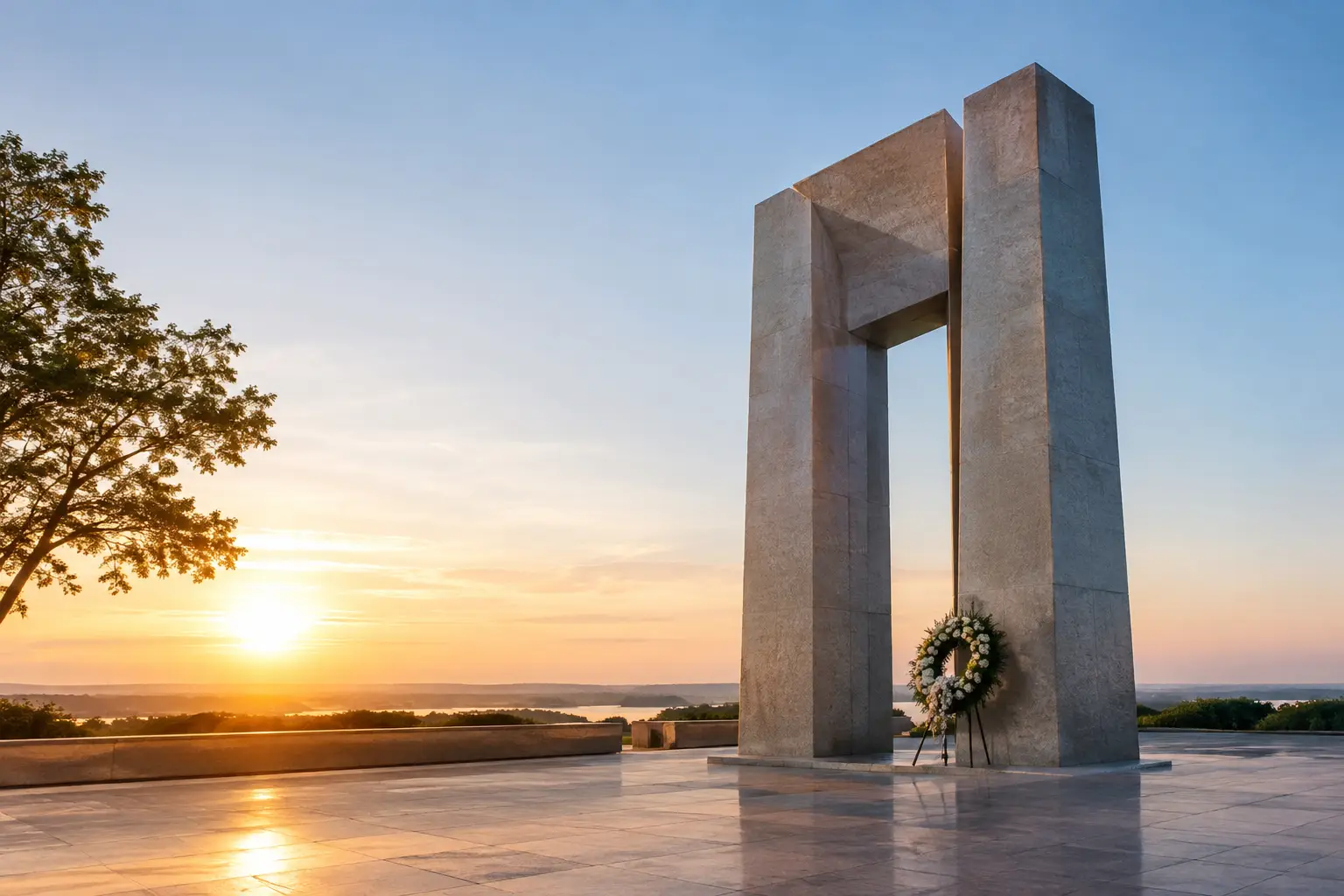
A memorial is encountered first in silence. Before an inscription is read or a name is recognised, its material, proportion and position communicate care. Memorial architecture gives that first encounter its form: a crafted relationship between memory, landscape, faith, family and time. At its best, it does not seek attention through excess. It makes space for reflection, allowing permanence and feeling to coexist with grace.
For a family, a memorial may be the final expression of a loved one’s character. For a community or institution, it may hold the memory of many lives and a shared history. These are different responsibilities, yet both call for the same seriousness of thought. Every line, joint, letter and surface must serve the purpose of remembrance.
What Memorial Architecture Must Achieve
Memorial architecture is often discussed through style: classical, contemporary, religious, monumental or understated. Style matters, but it is only the visible part of a more demanding task. A lasting memorial must belong to its setting, withstand weather and visitation, and retain its emotional clarity long after the moment of installation.
Proportion is fundamental. A monument that is too slight can disappear within an open cemetery or civic square; one that is too imposing can overwhelm its surroundings and the people who come to visit. The right scale depends on the site, the surrounding monuments, sightlines, local regulations and the intended experience. A family tomb beneath mature trees asks for a different language from a commemorative wall in an urban churchyard.
The most successful work also balances individuality with restraint. Portraiture, carved symbols, bronze elements or a distinctive stone can create a deeply personal presence. Yet a memorial need not explain everything. A carefully chosen word, a simple cross, a botanical motif or the quiet warmth of veined marble can carry meaning without reducing a life to decoration.
Stone as a Language of Remembrance
Natural stone has remained central to funerary and commemorative work because it possesses both practical endurance and emotional depth. It is formed over geological time, varied in colour and movement, and capable of receiving a precise architectural finish. No two blocks are identical. This natural distinction allows a memorial to feel singular while remaining rooted in an ancient material tradition.
Marble offers luminosity, refinement and a remarkable capacity for sculptural detail. It is especially suited to interiors, covered chapels and monuments where its changing response to light can be appreciated. Its use outdoors requires informed selection and suitable finishing, as some marbles are more vulnerable than granite to weathering, pollution and biological growth.
Granite is valued for exceptional density and resilience. Its polished, honed or flame-textured surfaces can carry inscriptions with clarity while meeting the demands of exposed locations. Dark granites lend great contrast to engraved lettering; lighter varieties can bring softness and quiet radiance to a cemetery landscape.
Travertine has a more open, tactile character, with a warm palette that connects naturally to historic Italian architecture. It is often chosen where a memorial is intended to feel architectural rather than overtly sculptural. Onyx, used with discretion and usually in protected settings, introduces translucency and an almost devotional quality. Bronze and steel can complement stone beautifully, particularly for lettering, reliefs, portrait medallions and contemporary structural details.
Material choice, however, should never be made from a small sample alone. The grain direction, colour range, porosity, frost resistance, quarry provenance and intended finish all influence the result. A stone that appears immaculate in a showroom may not be appropriate for a windswept hillside, a coastal cemetery or a heavily shaded cloister. Knowledge of the material is not an embellishment to design; it is the basis of design.
The Site Is Part of the Monument
A memorial is not an isolated object. It enters into conversation with architecture, vegetation, pathways, light and the rituals of those who visit. This is particularly true in historic cemeteries, where each new intervention must respect a visual fabric shaped across generations.
Orientation can alter the whole experience. Morning light may reveal the fine carving of a relief, while a west-facing surface can make engraved names harder to read at the time visitors most often arrive. Drainage, ground settlement and access for installation are equally consequential. A monument may be beautiful on paper yet fail in service if its foundation, fixing system and water management have not been considered from the outset.
In a public memorial, the movement of people becomes a design material. A path may invite a gradual approach; a low wall may create a place to pause; a change in texture underfoot can signal a threshold without the need for signage. The architecture should guide attention gently, never prescribe emotion. Remembrance is personal, even when it is shared.
Inscription, Sculpture and the Discipline of Detail
The inscription is often the most intimate part of a memorial. Its typography must be chosen not only for beauty but for legibility across decades. Letter spacing, depth of carving, contrast, shadow and the scale of individual characters deserve the same consideration as the stone itself.
Hand-carved lettering offers a living depth that changes with the light. Sandblasting can provide precision and consistency, especially for longer texts or repeated names, while incised letters may be enhanced with paint, metal or gilding where appropriate. There is no universally superior method. The decision depends on the chosen material, the exposure of the site, the visual language of the design and the maintenance expectations of those responsible for the memorial.
Sculptural work demands similar restraint. A carved angel, a floral relief or an abstract form can give a monument lasting expressive force when it is conceived as part of the whole. Applied ornament that bears no relation to the monument’s proportions tends to date quickly. In contrast, thoughtful carving allows the character of the stone to remain present: a fold of drapery may follow a vein, or a low relief may emerge almost imperceptibly from a honed surface.
This is where skilled craftsmanship becomes visible not as display, but as conviction. Clean arrises, aligned joints, carefully resolved bronze fixings and lettering that remains clear at close range all express respect for the person or event being commemorated.
Designing for Time, Not Just for Installation
A memorial commission should be approached with the horizon of decades, and often generations, in mind. That means specifying appropriate thicknesses, concealed or considered fixings, stable foundations and finishes that will age honourably. It also means accepting that natural materials change. Stone acquires patina; bronze deepens in tone; an outdoor surface may gradually soften beneath rain and light.
This ageing is not necessarily a flaw. The question is whether it has been anticipated. A polished surface may preserve a formal clarity but reveal water marks and scratches more readily. A honed or textured finish can sit more quietly in a landscape and offer greater visual forgiveness. The right answer depends on the desired atmosphere and the care available after installation.
Historic memorials present a further responsibility. Restoration should preserve material evidence rather than impose a false newness. Cleaning must be calibrated to the stone and the type of soiling. Repairs require compatible materials and methods. Missing elements may need careful reconstruction, but where certainty is absent, a respectful distinction between old and new can be more honest than imitation.
For more than a century and a half, Torchio Marmi has worked with the understanding that stone is both an architectural material and a cultural record. That dual perspective is essential when creating new monuments to memory or conserving those entrusted to us by earlier generations.
A Commission Shaped by Listening
The beginning of a memorial project is rarely a drawing. It is a conversation about the person, family, place or history that the work must hold. From there, the project can take shape through site study, material selection, preliminary proportions, inscriptions and full-scale technical planning.
For private clients, this process should allow room for feeling without losing practical direction. For architects, municipalities and religious bodies, it should unite aesthetic intent with approvals, cemetery requirements, installation logistics and long-term stewardship. Bespoke work takes time because each decision carries consequence.
A worthy memorial does not need to be grand to endure. It needs a truthful material, a considered place and the hand of a maker who understands that beauty can be an act of remembrance. When these elements meet, stone becomes more than a marker: it becomes a quiet, lasting presence for those who return.