
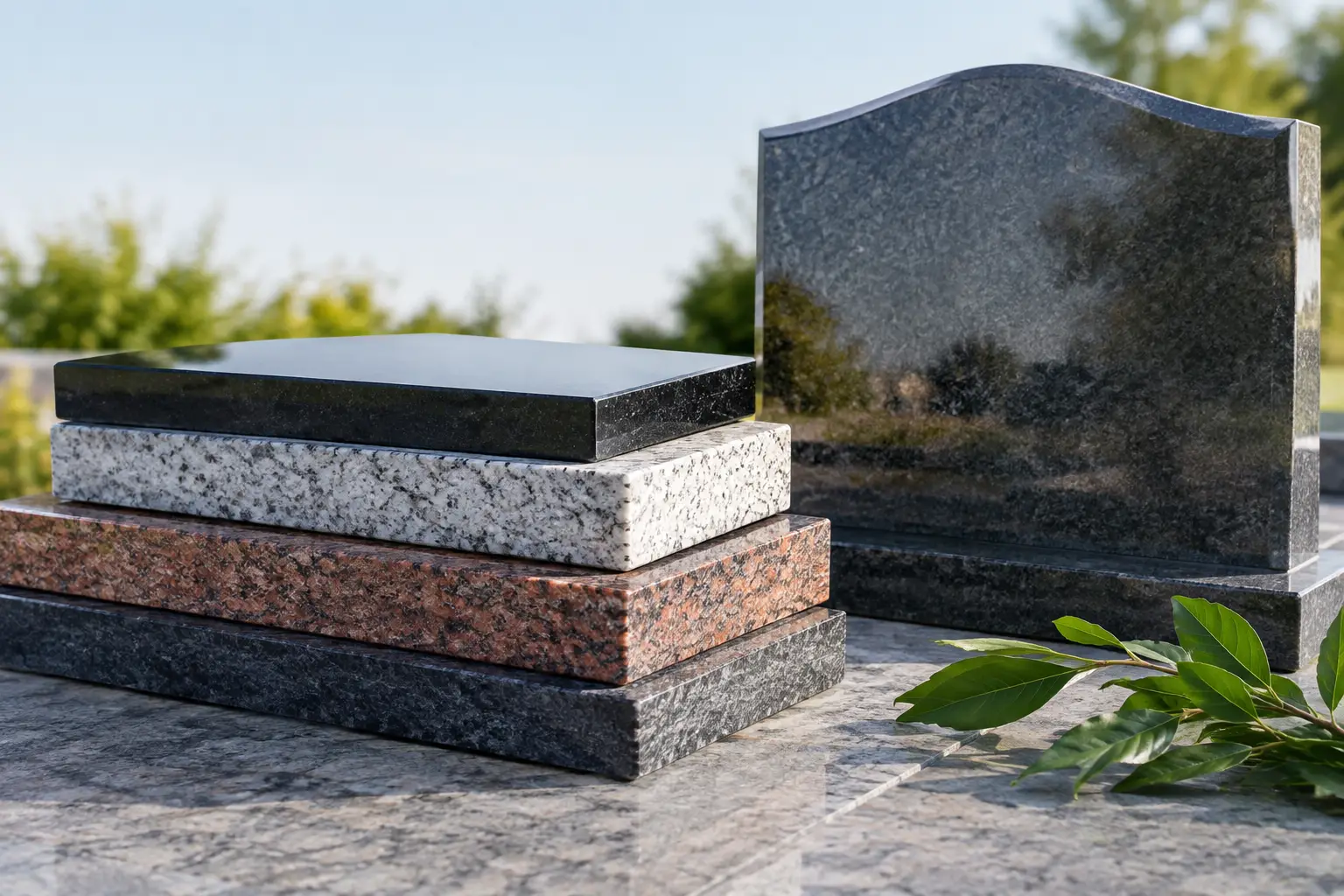
A name carved into stone, cast in bronze or incised into steel has a responsibility beyond decoration. It must remain legible through changing light, weather and generations, while expressing the character of a life with restraint and beauty. This memorial inscription materials guide considers the materials that give words their permanence, and the choices that allow a tribute to feel considered rather than merely durable.
For a private family memorial, a cemetery monument or a commemorative architectural element, material and inscription should be conceived together. The surface determines how letters are formed, how they catch the light, how they age, and how much care they will require. A fine inscription is never an afterthought: it is part of the monument’s voice.
Memorial inscription materials guide: begin with place
The first question is not simply whether marble, granite or bronze is most beautiful. It is where the memorial will stand. An exposed cemetery plot, a sheltered cloister, a coastal setting and an interior chapel place very different demands on a material.
Frost, persistent rain, airborne pollution and salt can all alter a surface over time. Local cemetery regulations may also establish requirements for dimensions, fixing methods, stone types, lettering styles or the use of photographic and metal elements. These practical conditions deserve attention at the beginning, when they can inform a design rather than compromise one.
The surrounding monuments matter too. A memorial can honour its individual subject while entering a quiet conversation with its setting. In a historic burial ground, this may call for a stone and letterform that respect the established fabric. In a contemporary family chapel, a finely finished bronze panel or a dark granite inscription may provide a more architectural expression.
Natural stone: permanence shaped by geology
Natural stone has long been the principal material of remembrance because no two blocks are identical. Veining, grain, mineral composition and colour give every monument its own presence. Yet these same qualities mean that each stone calls for a different approach to carving and care.
Marble: luminous and expressive
Marble carries a particular cultural resonance in Italian commemorative art. Its depth, softness and subtle luminosity allow sculptural forms and hand-cut lettering of exceptional delicacy. White and pale marbles can lend a memorial an atmosphere of calm and reverence, while more richly veined varieties bring movement and individuality.
Its trade-off is exposure. Marble is comparatively porous and can be affected by acidic rain, pollution and repeated freeze-thaw cycles. On a sheltered site, and with appropriate maintenance, it can remain profoundly beautiful for generations. In severe or highly exposed conditions, however, a harder stone may better preserve crisp lettering. The choice is not between beauty and performance, but between the particular qualities required by the place.
Granite: clarity under demanding conditions
Granite is valued for density, strength and resistance to weathering. Dark granites, in particular, offer a powerful ground for inscriptions, as polished surfaces can create clear contrast with pale, gilded or frosted lettering. They are often well suited to memorials in exposed locations and to designs that require precise, enduring legibility.
A highly polished black surface can appear formal and contemporary, whereas flamed, honed or lightly textured finishes soften the effect and reduce reflection. Granite is less yielding than marble, so the technique and depth of incision must be selected with skill. The result can be austere if handled without sensitivity, but in the right proportions it has immense dignity.
Limestone, sandstone and travertine: warmth and a quieter character
Limestone, sandstone and travertine offer warmer tonalities and a more tactile surface. They can be especially appropriate for traditional churchyards, historic contexts and memorial architecture intended to feel rooted in its landscape. Their gentle colour palette often makes them feel less monumental and more intimate.
These stones vary greatly in density and porosity. Fine-grained, durable varieties can perform admirably, but soft or open-textured stones may not suit very small lettering or heavily exposed sites. The inscription may need broader strokes, deeper cutting and a carefully judged layout. What appears to be a limitation can become a design principle, giving the words an honest, crafted scale.
Bronze and steel: inscriptions with architectural presence
Stone need not carry every word alone. Bronze and steel can introduce contrast, texture and a different relationship with time.
Bronze is one of the most established materials for memorial plaques, raised letters and portrait medallions. It begins with a warm richness and gradually develops a patina shaped by its environment. This natural ageing is often part of its appeal: bronze does not remain unchanged, but matures with quiet distinction. Cast or raised lettering is especially legible, while recessed lettering can bring a more restrained character.
The finish deserves discussion. A protected patina, polished highlights or a darker oxidised tone will each change the visual balance. Bronze also requires thoughtful detailing to prevent water retention and to ensure secure fixing to the stone or architectural substrate.
Stainless steel offers a more contemporary language. Brushed or satin surfaces can complement modern memorial architecture, while laser-cut or deeply engraved text produces clean, precise forms. Steel is highly resistant to corrosion when the correct grade and installation method are specified, although it can feel visually cooler than bronze or natural stone. It is often most successful when its crisp geometry is intentionally balanced by the warmth of a stone base or surrounding landscape.
The lettering method shapes the meaning
An inscription is read with the eye, but also with the hand and through changing daylight. Its method of execution influences its character as much as its wording.
Hand-cut lettering has a living quality that cannot be reduced to uniformity. The slight modulation of a skilled carver’s work gives each letter depth and rhythm. It is particularly suited to marble, limestone and traditional monumental forms, where the shadows within the cut bring the words forward naturally.
Machine-cut or sandblasted lettering can deliver excellent precision and consistency, especially on hard granite and for longer texts. It should still be proportioned with care. Depth, spacing and the treatment of corners determine whether the result feels composed or merely applied.
Raised bronze letters create shadow and relief, making them highly readable at a distance. Incised letters can be left natural, darkened, painted or gilded. Gilding has an unmistakable presence on darker stones, but it is a choice to make with sensitivity to the setting. Where a quieter effect is desired, a simple cut that changes gently with the light may say more.
Legibility is a form of respect
The most poetic inscription is of little service if it cannot be read. Letter size should respond to viewing distance, the number of lines, the texture of the material and the anticipated ageing of the surface. Small lettering may look elegant on a drawing, yet become difficult to read outdoors or on a strongly veined stone.
Typeface selection should also resist fashion for its own sake. Classical Roman capitals remain enduring because their proportions are clear and balanced. A contemporary typeface can be equally appropriate where it belongs to the memorial’s wider design language, but excessive ornament or tightly compressed spacing rarely improves a lasting work.
Before cutting begins, the full-scale layout should be reviewed on the chosen material wherever possible. A line break, an apostrophe or the position of a date can alter the balance of the whole composition. Names, dates, quotations and symbols need room to breathe.
Care, ageing and the value of honest materials
Every memorial will acquire traces of time. The aim is not to deny ageing, but to choose materials and finishes that age gracefully. Granite generally requires modest cleaning, while marble and softer calcareous stones should be treated with gentler methods. Harsh acids, domestic detergents and abrasive tools can permanently damage polished stone, open its surface or weaken painted lettering.
Bronze may be cleaned and re-waxed when appropriate, though many families choose to preserve its natural patina. Steel benefits from periodic inspection, particularly around fixings and joints. In all cases, drainage, sound installation and access for maintenance do more for longevity than superficial treatments alone.
For historic memorials, conservation should favour the retention of original material and evidence of craftsmanship. Replacement is sometimes necessary, but it should never erase the character that gives an old monument its meaning. This is the same discipline that guides sensitive restoration: intervene with knowledge, and let the material remain truthful.
A memorial made for one life
The finest material is not automatically the rarest, hardest or most costly. It is the one that brings together setting, permanence, legibility and feeling. A pale hand-carved marble tablet may be exactly right for a sheltered family chapel; dark granite may offer the clearest assurance in an exposed landscape; bronze may carry a voice that grows richer with the years.
At Torchio Marmi, monuments to memory are approached as individual works of material knowledge and human care. Give the inscription time at the design stage, let the stone or metal guide its form, and the words may continue to speak with grace long after the moment in which they were chosen.