
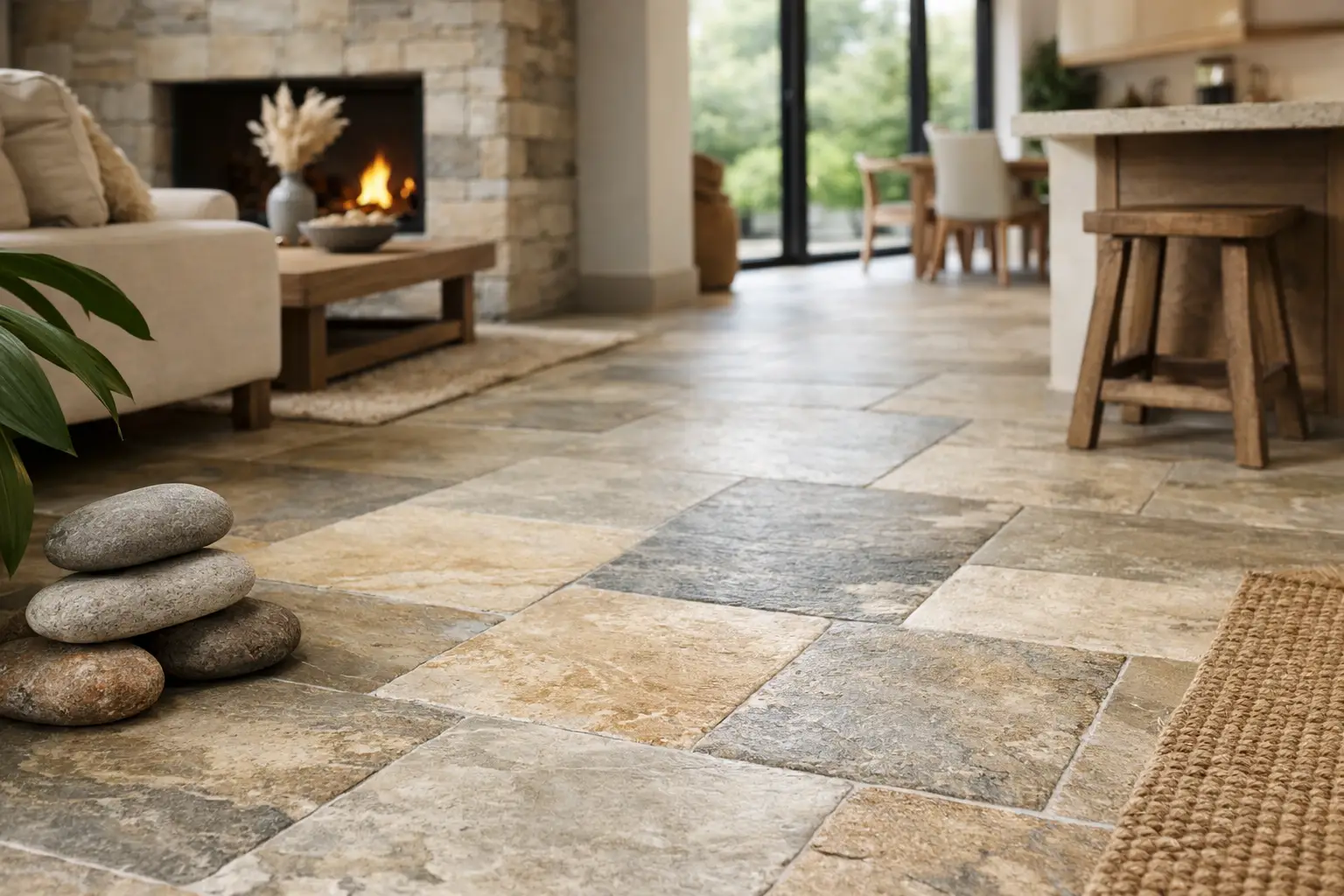
A floor is the surface a home asks most of. It receives the first footsteps of the morning, the movement of family life, the weight of furniture and the changing light of every season. Natural stone flooring for homes gives that daily stage a sense of permanence: not a decorative finish applied to a room, but a material presence that shapes its atmosphere for generations.
For a private residence of distinction, stone is chosen as much for feeling as for performance. The quiet veining of marble, the softened texture of travertine, the mineral depth of granite or the pale, lived-in character of limestone can alter the perceived scale and light of an interior. Yet the most successful floor is never selected from a sample alone. It begins with the architecture, the way the house is inhabited and an exact understanding of the stone itself.
Why natural stone belongs in a considered home
Natural stone carries variation that cannot be repeated by an industrial surface. Veins travel differently from one slab to the next; pores, fossils and tonal shifts record the material's geological history. This is not imperfection. It is the character that allows a floor to feel composed rather than manufactured.
Its visual value is matched by longevity. Properly specified, installed and maintained, stone flooring can serve a home for decades, often becoming more beautiful as its surface acquires a gentle patina. A honed marble hall may develop a softened lustre from daily passage. Travertine may gain warmth over time. In historic buildings, such marks are part of the architectural memory rather than a reason for replacement.
Stone also brings a physical intelligence to interior design. It stores and releases heat effectively, making it particularly well suited to underfloor heating. In warm climates, it offers welcome coolness underfoot. Across a large open-plan room, continuous stone paving can create visual calm, connecting kitchen, dining and living spaces without the interruption of thresholds or changing materials.
Selecting the right stone for the room
There is no single best stone for every room. The correct choice depends on traffic, moisture, natural light, the desired finish and the level of maintenance a household wishes to embrace. A material of great beauty must also be appropriate to its setting.
Marble: light, movement and formal grace
Marble is often the natural choice where a home calls for luminosity and expressive veining. It can be monumental in an entrance hall, restrained in a bathroom or unexpectedly contemporary when cut into large, finely jointed slabs. White and pale marbles amplify daylight, while darker varieties create a more intimate, architectural mood.
Because many marbles are calcareous, they can react to acidic substances. In a kitchen or busy family dining area, this does not automatically rule marble out, but it does require an honest conversation about use. A honed finish and a carefully chosen sealer can make everyday marks less conspicuous than a highly polished surface, while preserving the material's dignity.
Travertine and limestone: warmth with depth
Travertine has a particular affinity with Italian architecture. Its natural cavities and layered colour create a floor that feels settled, even when newly installed. Filled and honed travertine offers a refined, even surface; an open-pore or brushed treatment gives greater texture and a more tactile, rustic expression.
Limestone is valued for its quiet, earthy palette, from warm creams to silvery greys. It suits country houses, town residences and contemporary interiors alike when the scale and finish are properly considered. As with marble, limestone benefits from sensible care, particularly in areas where wine, citrus or strongly coloured foods may be spilled.
Granite and quartzite: strength in demanding spaces
Granite is exceptionally dense and resilient, with a crystalline character that ranges from discreet to dramatic. It is an assured choice for entrances, kitchens and spaces with substantial footfall. Quartzite offers similar practical strength while often presenting more animated movement and subtle tonal variation.
These harder stones can be excellent candidates where the brief requires a forgiving surface, but hardness should not become the only criterion. A dark, highly polished granite can show dust and water marks in strong sunlight, while a textured finish may be harder to clean. The finish must answer both the aesthetic intention and the realities of the room.
Natural stone flooring for homes is a matter of proportion
Stone becomes convincing when its format is in dialogue with the room. Small, repetitive tiles can make a generous hall feel busy, while oversized slabs in a compact room may create awkward cuts at walls and doorways. The dimensions of each piece, the width of the joints and the direction of the laying pattern all influence the finished composition.
Large-format slabs create continuity and allow the natural drawing of the stone to be read clearly. They are especially powerful in contemporary interiors and reception spaces, though they demand a sound substrate, precise handling and a careful plan for access. Cut-to-size modules bring rhythm and flexibility, while traditional patterns such as opus romano can give a residence a more established, layered character.
Bookmatching deserves particular care. When adjacent slabs are opened like the pages of a book so that their veins mirror one another, the floor becomes a deliberate artistic composition. Used with restraint, it can create a striking threshold, gallery-like hallway or central room. Used indiscriminately, it may overwhelm a space that needs quietness. Craft lies in knowing when to let the stone speak softly.
Finish determines how the floor will live
A polished finish reflects light and deepens colour, lending marble and certain granites a formal brilliance. It is well suited to rooms that are protected from grit and designed for a more ceremonial impression. However, polished stone can be slippery when wet and may reveal scratches or etching more readily in high-use settings.
Honed stone has a smooth, matt surface that feels contemporary and composed. It is often the most versatile finish for residential interiors because it diffuses light and makes daily life less visually demanding. Brushed, leathered and antiqued finishes introduce texture, helping to improve grip and giving stone a more relaxed, timeworn presence.
The right finish should be assessed in the actual light of the project. A sample viewed in a showroom cannot fully reveal how a surface will respond to low winter sun, poolside glare, entrance moisture or the evening warmth of artificial lighting. Whenever possible, larger samples should be considered alongside joinery, plaster, metalwork and fabrics.
Installation is where beauty becomes permanent
Even exceptional stone can disappoint when installation is treated as a routine building trade. The substrate must be stable, level and appropriate for the chosen format. Moisture, movement joints, adhesive selection, grout tone, underfloor-heating requirements and the sequence of other site works all demand attention before the first piece is laid.
The visual decisions are equally exacting. Vein direction should be planned, not left to chance. Pieces should be dry-laid where variation is pronounced, allowing the installer and designer to balance colour and movement across the room. Thresholds, stair treads, skirtings and transitions to timber or carpet should feel resolved as part of one architectural language.
This is the difference between buying stone and commissioning stonework. At Torchio Marmi, material knowledge and fabrication are brought together so that each floor can respond to the proportions, atmosphere and technical conditions of its setting. The aim is not simply coverage underfoot, but a surface with its own internal harmony.
Care that preserves character
Natural stone rewards regular, uncomplicated care. Grit is its most persistent enemy, particularly at entrances, so quality mats and prompt sweeping protect the finish from abrasion. For routine cleaning, use a pH-neutral cleaner formulated for natural stone and a well-wrung soft mop. Acidic, abrasive or bleach-based household products should be avoided, particularly on marble, limestone and travertine.
Sealers can provide valuable protection against staining, but they are not an invisible shield against every spill or mark. Their suitability depends on the stone's porosity, finish and location. A good maintenance plan recognises the difference between a temporary surface stain, a change in polish and genuine damage. Many signs of use can be sympathetically refined by a skilled stone specialist rather than concealed by harsh treatment.
A natural stone floor should not be expected to remain untouched. Its beauty lies partly in its capacity to accompany life: a softened edge, a mellowed surface, the familiar passage from one room to another. Chosen with judgement and made with care, it becomes less a finish than a lasting part of the home's story.